RESILIENCE & MINDSETMy Meeting with Pope Francis
Pope Francis died on April 21, 2025. Easter Sunday. He was 88 years old.
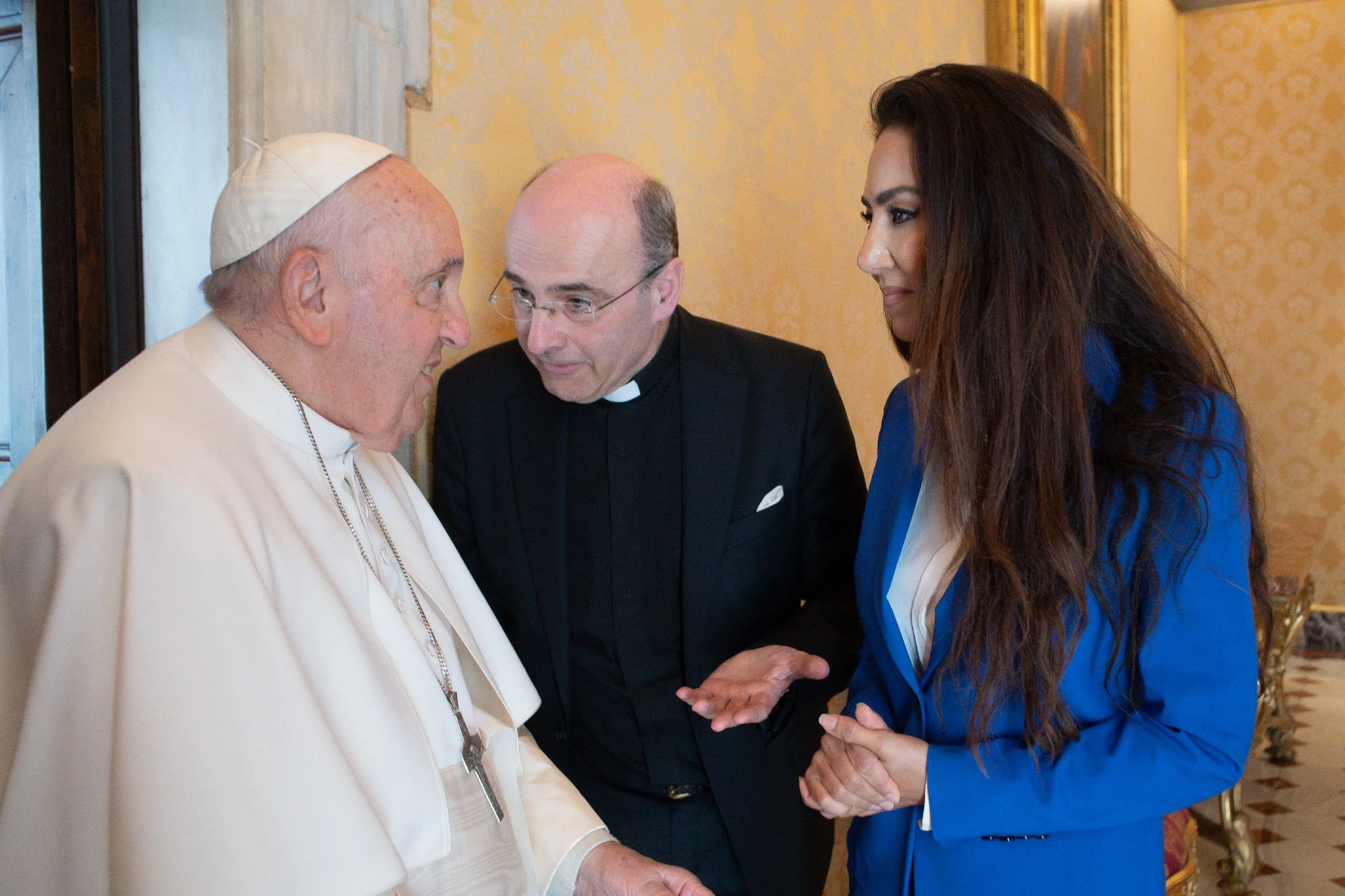
Exactly two years before that, he had asked to meet me. On my birthday. In the Vatican.
Not because I was famous. Not because I was a doctor. He had heard my story — a three-year-old girl who died in the snow while fleeing Iran, brought back to life by village women who had no idea they were performing a miracle. It was that girl he wanted to meet.
I wanted to ask him a thousand questions — personal questions no one had dared to ask. But early in our conversation, he asked something of me that completely knocked me sideways: "Pray for me," he repeated, again and again, with an intensity in his eyes that I will never forget.
He — the most powerful spiritual leader in the world, Pope for twelve years, shepherd of 1.4 billion Catholics, the man closest to God — was asking for my prayers. Not the other way around.
My first instinct was to crack a joke. But this was not the moment. His tone was deeply serious, his plea unmistakably real. So I sat with it, and in that silence I understood something: he, like you and me, is a human being. And right there was the core of something we keep failing to see — right in front of our eyes.
What Pope Francis saw is something that neither algorithms, longevity companies, nor artificial intelligence will ever see. It cannot be digitised. It cannot be placed in a data structure or transferred to a chatbot. It exists only between the body that was freezing to death and the hand that pulled it back to life.
That was the knowledge he was asking for.
He was asking for contact with what remains when everything else has been stripped away. The thing machines will never have.
We live in an age where everything is being reduced to data. Your pulse. Your sleep. Your biological age. Measurable. Optimisable. Marketable.
And yet you carry something inside you that no sensor can register.
It is not the soul — unless you want to call it that. It is the specific configuration of suffering, love, and wonder that you and only you possess — that no one can replicate, and that not even you fully understand. The human.
Sentio ergo sum. I feel, therefore I am. That is my claim against Descartes. It was also what Pope Francis affirmed without saying it.
Humility, gratitude, and love are our ultimate power. And here is the paradox: they are born from pain and hardship. When his hand rested in mine, there was no religious hocus pocus. It was a reminder of human fragility and vulnerability.
Our interpretations of that moment in the snow were different; where I saw a scientific miracle, the Pope saw the work of God. But beneath our different languages lay the same question — one I want us to sit with: if you had the power to prevent every painful event in your life, would you?
When I received the news that the Pope had died, I heard an echo of his voice: Pray for me. And I felt a deep humility in knowing that the most powerful man in the world, in one of his final acts, chose to ask something of a girl who once had nothing at all.
No billionaire, no scientist, no algorithm will ever be able to replace that.
— Mouna